
Use ChatGPT for Content Writing
ChatGPT can help content creators write faster, generate ideas, create outlines, improve existing drafts, and optimize content for search engines.
The best AI tools for search optimization marketing in 2026 help marketers improve keyword research, content quality, search visibility, and audience engagement. These tools can analyze search intent, suggest relevant keywords, optimize website content, and identify new ranking opportunities. AI-powered platforms also support SEO, AEO, and GEO by helping businesses create useful, well-structured content for search engines and AI-powered search experiences. Choosing the right tool depends on your goals, budget, and marketing strategy. With effective AI tools, marketers can save time and build stronger online visibility.
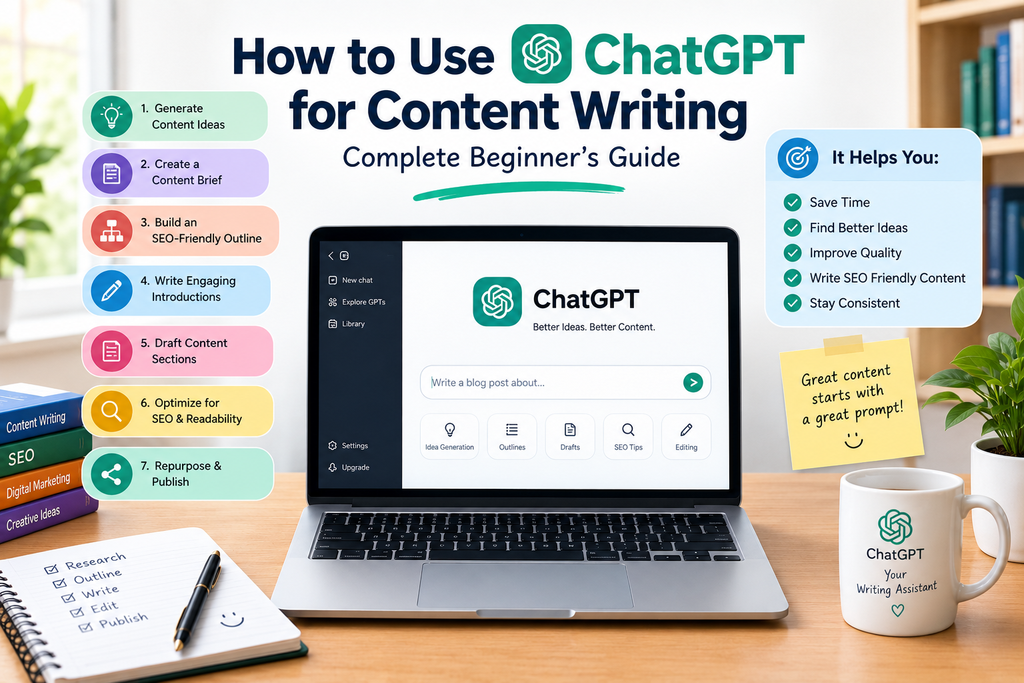
However, the best results usually come when ChatGPT is used as a writing assistant rather than a replacement for human creativity and editing.
You can use ChatGPT throughout the content creation process, including topic research, brainstorming, outlining, drafting, editing, SEO optimization, and repurposing content.
Whether you are a beginner blogger, freelancer, marketer, student, or social media creator, learning how to use ChatGPT for content writing can make your workflow more efficient.
What Can ChatGPT Do for Content Writing?
ChatGPT can assist with:
- Blog topic ideas
- Content outlines
- Headlines and titles
- Blog introductions
- Article drafts
- Product descriptions
- Social media captions
- Video scripts
- Email content
- FAQs
- Meta descriptions
- Content briefs
- Editing and proofreading
- Content repurposing
- SEO optimization
The quality of the output depends heavily on the instructions, context, examples, and information you provide.
1. Generate Content Ideas
One of the easiest ways to use ChatGPT is brainstorming.
Instead of spending a long time trying to think of topics, give ChatGPT your niche, target audience, and goal.
Prompt:
Give me 20 blog topic ideas for a website about AI tools. Focus on beginners and choose topics with strong search intent. Avoid generic topics and make each idea clearly different.
You can make the results more useful by specifying your audience.
For example:
Generate 20 content ideas about digital marketing for small-business owners who have little marketing experience.
2. Create a Content Brief
Before writing an article, create a content brief.
A good brief can include:
- Target audience
- Search intent
- Primary keyword
- Secondary keywords
- Main questions
- Suggested headings
- Content angle
- Recommended word count
- Examples to include
Prompt:
Create a detailed content brief for an article targeting the keyword “ChatGPT for content writing.” Include search intent, related keywords, H2 and H3 headings, questions readers may ask, and important points to cover.
This gives you a clear direction before drafting.
3. Build an SEO-Friendly Outline
ChatGPT can turn a topic into a structured outline.
For example:
Create an SEO-friendly outline for an article titled “How to Use ChatGPT for Content Writing.” Include an introduction, definition, practical use cases, prompts, best practices, mistakes to avoid, and FAQs.
A strong outline helps prevent repetitive sections and keeps the article focused.
4. Write Better Introductions
The introduction should quickly tell readers what they will learn.
Instead of asking:
Write an introduction about ChatGPT.
Give more specific instructions:
Write a 100-word introduction for a beginner-friendly article about using ChatGPT for content writing. Start with the main problem content creators face and explain how ChatGPT can help. Keep the tone professional and conversational.
You can also ask for multiple introduction styles and choose the strongest one.
5. Create Blog Drafts
ChatGPT can help create the first draft of a blog post.
However, avoid asking it to produce a huge article with little context.
A better approach is to work section by section.
Prompt:
Write the H2 section “How ChatGPT Helps With Content Writing.” Explain the main benefits for beginner content creators. Use simple language, short paragraphs, and practical examples. Avoid exaggerated claims.
This gives you more control over the final article.
6. Create Engaging Headlines
Your headline can strongly influence whether someone clicks on your content.
Ask ChatGPT for several variations.
Prompt:
Create 15 high-CTR blog titles for the keyword “ChatGPT for content writing.” Keep them clear, useful, and natural. Avoid clickbait and keep each title under 60 characters where possible.
You can then select the title that best matches your content and search intent.
7. Improve Existing Content
You do not always need ChatGPT to write something from scratch.
You can provide your existing paragraph and ask it to improve:
- Grammar
- Clarity
- Readability
- Sentence structure
- Tone
- Flow
- Conciseness
Prompt:
Improve this paragraph for clarity and readability. Keep the original meaning, remove unnecessary words, and make it sound natural and professional.
This is particularly useful when you already have your own ideas but need help polishing the writing.
8. Rewrite Content for Different Audiences
The same information can be written differently for different readers.
For example, you can ask ChatGPT to rewrite technical content for:
- Beginners
- Students
- Business owners
- Marketers
- Developers
- General readers
Prompt:
Rewrite this explanation for someone who has never used an AI writing tool. Use simple language and include one everyday example.
This can make your content more accessible.
9. Create SEO Meta Descriptions
ChatGPT can generate multiple meta description options.
Prompt:
Write 5 SEO-friendly meta descriptions for an article targeting “ChatGPT for content writing.” Keep each one concise, natural, and focused on encouraging clicks without using misleading claims.
Always make sure the final description accurately represents the page.
10. Generate FAQs
FAQs are useful for answering specific questions readers may have.
For example:
Generate 10 frequently asked questions about using ChatGPT for content writing. Focus on questions beginners are likely to search for and provide concise answers.
You can then verify the questions and answers before publishing.
11. Create Content for Social Media
A blog post can become several pieces of social content.
For example, ask ChatGPT to turn an article into:
- Instagram captions
- LinkedIn posts
- X posts
- Short-form video scripts
- Carousel ideas
- Newsletter content
Prompt:
Turn this blog article into 5 social media posts. Give each post a different hook and keep the language natural and useful.
This allows you to get more value from one piece of content.
12. Create Product Descriptions
ChatGPT can also help ecommerce businesses create product descriptions.
Prompt:
Write a clear product description for a reusable stainless-steel water bottle. Highlight its practical benefits, target everyday users, and avoid making claims that are not provided in the product information.
Always provide accurate product specifications rather than asking AI to invent them.
13. Improve Content Readability
Long sentences and complicated language can make articles difficult to read.
Ask ChatGPT to identify:
- Long sentences
- Repeated words
- Unclear explanations
- Unnecessary phrases
- Passive constructions
- Sections that need examples
Prompt:
Review this article for readability. Identify confusing sections and suggest clearer alternatives while maintaining the original meaning.
14. Create Different Content Formats
One idea can become multiple formats.
For example, a blog article about productivity could become:
Blog post → YouTube script → Instagram carousel → LinkedIn post → Email newsletter → Short video script
Ask ChatGPT to adapt your content rather than simply copying it.
Prompt:
Convert this blog post into a 60-second educational video script. Start with a strong hook, explain the main idea clearly, and finish with a simple call to action.
15. Create a Content Calendar
ChatGPT can help you organize your publishing schedule.
Prompt:
Create a 30-day content calendar for a website about AI tools. Include blog topics, social media ideas, content format, target audience, and the main keyword for each topic.
You can then modify the calendar according to your publishing capacity and business goals.
Best ChatGPT Prompt Formula for Content Writing
A useful prompt usually contains five elements:
Role + Task + Context + Requirements + Format
For example:
Act as an experienced SEO content writer. Create an outline for a beginner-friendly article about AI productivity tools. The target audience is students and freelancers. Include practical examples, common questions, and actionable tips. Format the result using H2 and H3 headings.
This gives ChatGPT much more direction than a simple request such as:
Write an article about AI productivity.
ChatGPT Prompts for Content Writers
Blog Topic Prompt
Give me 25 unique blog topic ideas about [topic]. Focus on beginner-friendly questions and different search intents.
Blog Outline Prompt
Create a detailed outline for a [word count]-word article targeting [keyword]. Include H2s, H3s, FAQs, examples, and important points readers expect to find.
Introduction Prompt
Write a compelling introduction for an article about [topic]. Address the reader’s main problem within the first few sentences and clearly explain what the article will cover.
Editing Prompt
Edit this article for grammar, clarity, readability, repetition, and sentence flow. Preserve the original meaning and avoid changing facts.
SEO Prompt
Review this article for on-page SEO. Suggest improvements to the title, headings, keyword placement, internal linking opportunities, meta description, FAQs, and search intent coverage.
Content Repurposing Prompt
Turn this article into 5 LinkedIn posts, 5 short-form video ideas, 5 social media captions, and a newsletter outline. Keep each format unique.
How to Use ChatGPT Without Making Your Content Generic
One common problem with AI-generated content is that it can sound repetitive or generic.
You can improve the output by giving ChatGPT:
- Your personal experiences
- Original examples
- Audience information
- Brand voice
- Real data
- Expert opinions
- Case studies
- Specific instructions
- Unique perspectives
For example, instead of asking:
Write about productivity.
Try:
Write a practical section about productivity for freelancers who manage multiple clients. Include common workflow problems and realistic solutions. Avoid generic advice such as “work harder” or “stay motivated.”
The more useful context you provide, the more relevant the result can become.
Should You Publish ChatGPT Content Directly?
It is better to treat AI-generated content as a draft or starting point rather than automatically publishing it without review.
Before publishing, check:
- Accuracy
- Originality
- Examples
- Facts and statistics
- Grammar
- Search intent
- Brand voice
- Reader usefulness
- Repetition
- Overall quality
Add your own expertise, experience, examples, and perspective wherever possible.
Common Mistakes When Using ChatGPT for Content Writing
Giving vague instructions
A vague prompt often produces a generic response.
Asking for everything at once
Large, complicated requests can make it harder to maintain consistency. Breaking the work into stages can give you better control.
Relying on AI for facts
AI-generated information should be checked, especially when the content involves statistics, research, current events, health, finance, law, or other high-stakes topics.
Ignoring the target audience
Content should be written for real readers, not just search engines.
Publishing without editing
Always review AI-generated content before publishing.
Frequently Asked Questions
Can ChatGPT write blog posts?
Yes. ChatGPT can help generate blog ideas, outlines, introductions, drafts, FAQs, titles, and editing suggestions. Human review is still important for accuracy, originality, and quality.
Is ChatGPT good for content writing?
ChatGPT can be a useful content-writing assistant, particularly for brainstorming, outlining, drafting, rewriting, and repurposing content.
How do I get better content from ChatGPT?
Give it clear instructions, relevant context, your target audience, desired tone, content requirements, examples, and output format.
Can ChatGPT help with SEO content?
Yes. It can help with keyword-focused outlines, titles, meta descriptions, FAQs, content structures, and readability. SEO performance depends on many factors beyond AI-generated text.
Can ChatGPT replace content writers?
ChatGPT can automate parts of the writing process, but strong content still benefits from human expertise, originality, fact-checking, editorial judgment, and understanding of the target audience.
What is the best prompt for content writing?
There is no single best prompt for every situation. A strong prompt clearly explains the role, task, context, audience, requirements, and desired output format.
